How to start playing padel: a beginner's guide
By Lisa · padel player in 10+ countries · 1 November 2026 · 7 min read
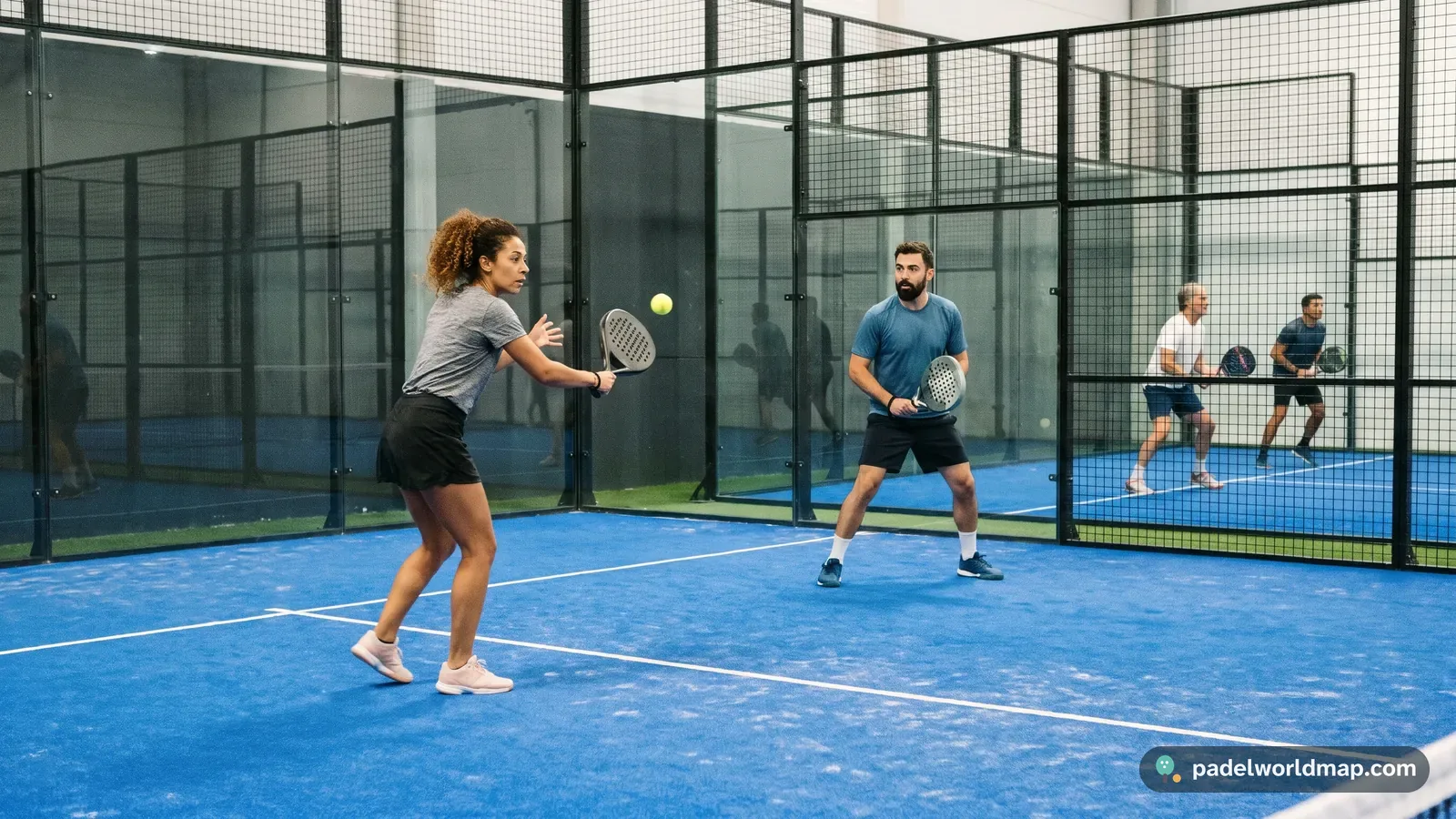
I still remember my first padel game: I spent the first ten minutes ducking away from balls coming off the glass. By the end of the hour I was hooked. The good news is that padel is one of the easiest racket sports to start. Here's everything you need for your first game.
Step 1: Find a court near you
Padel is played at padel clubs, sports centres and more and more tennis clubs. The quickest way to find one is to tap Padel near me on our home page: you'll see the closest venues, how far away they are and whether they're open right now. You can also search your town, or browse a country like the UK, Spain or the USA.
Tip: if you live somewhere rainy, look for clubs with indoor or covered courts, so a shower doesn't cancel your game.
Step 2: Book a court, or join a group
Padel is almost always played in doubles, so you book a court for four. You have three options:
- Bring three friends and book a court online or by phone. Most clubs use a booking app or their own website; every club page on PadelWorldMap shows the booking button when there is one.
- Join a beginner lesson or clinic. Many clubs run group sessions for newcomers, which is the fastest way to learn. Look for the Lessons pages in your town, for example padel lessons in London.
- Join an open or social game. Lots of clubs organise “social” sessions or matches where you're paired with players of your level. Ask at the desk.
Step 3: What to bring
- A racket: you don't need your own. Most clubs rent rackets, so try a few before you buy. Read how to choose a padel racket when you're ready.
- Balls: clubs usually sell them. Padel balls look like tennis balls but have a little less pressure, so tennis balls are not the same.
- Shoes: sports shoes with a good grip and side support. Padel courts are often artificial grass with sand, so running shoes with a smooth sole can slip. Shoes made for padel or clay courts work best.
- Comfortable sportswear and water.
Step 4: Learn the basic rules (they're simple)
You only need a few rules to start playing. These come from the official FIP Rules of Padel:
- The serve is underhand. Stand behind the service line, bounce the ball once, and hit it at or below waist height, diagonally into your opponent's service box. You get two tries.
- The ball must bounce in the other half first. Your shot has to land on the ground on the other side before it touches any wall there.
- Then the walls are in play. After the ball bounces, it may come off the glass, and you can still hit it, as long as it hasn't bounced twice on the ground.
- You may use your own walls. You can hit the ball against your own glass to send it over the net. Hitting your own metal mesh, though, loses the point.
- Scoring is like tennis: 15, 30, 40, game. Six games (with a two-game lead) win a set. You change ends after the first, third and every following odd game.
Want to see how the court is laid out? Read our guide to padel court dimensions.
Step 5: Seven tips for your first game
- Let the ball come off the glass. Beginners rush at every ball. Often it's easier to wait, let it bounce off the back wall and hit it as it comes towards you.
- Move with your partner. Think of the two of you as being connected by a rope: move forward and back together, side by side.
- Hold the racket short and relaxed. Padel is about control, not power. Short, compact swings work better than big tennis swings.
- Use the lob. When the other pair is close to the net, a high ball over their heads pushes them back. It's the most useful shot in padel.
- Get to the net. The pair that controls the net usually wins the point. After a good lob, move forward together.
- Wear the wrist strap. Padel rackets have a strap for a reason: it stops the racket flying into your partner or the glass.
- Watch your partner's racket. Padel is played close together. Call “mine” or “yours”, and keep your eyes open on balls in the middle.
Step 6: Keep playing
Most people improve quickly in the first few weeks. Playing once or twice a week, taking a few lessons and mixing with players who are slightly better than you is the fastest way to grow. And when you travel, bring your shoes: there are padel courts in more than 70 countries now, from Madrid to Bali and Dubai.
Still curious how padel differs from that other fast-growing sport? Read padel vs pickleball, or check our padel FAQ.