How to choose a padel racket: shape, weight and balance
By Lisa · padel player in 10+ countries · 1 November 2026 · 7 min read
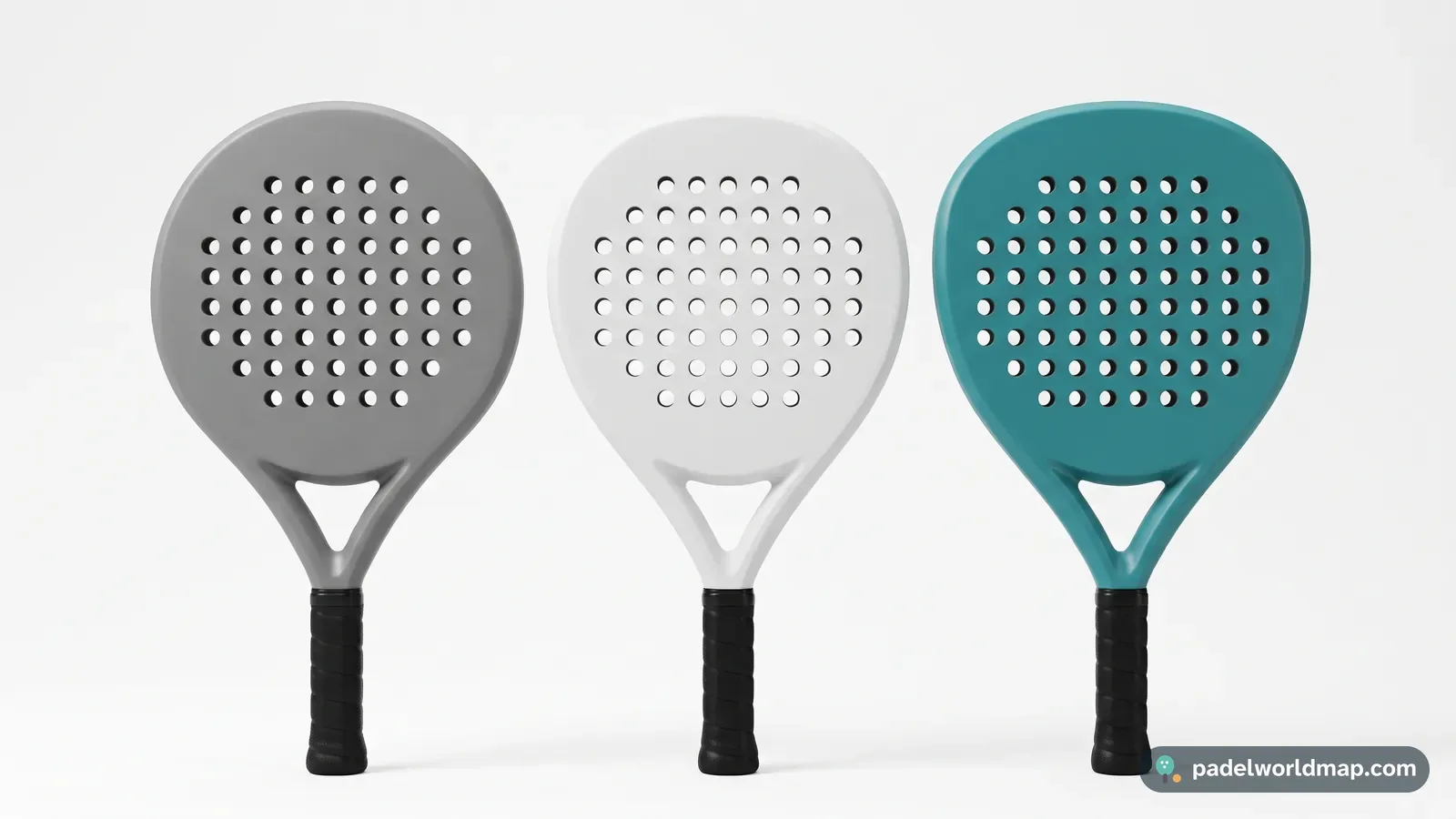
Walk into any padel shop and you'll see a wall of rackets that all look roughly the same. They're not. The shape, weight and balance decide whether a racket forgives your mistakes or punishes them. This guide explains what actually matters, without pushing any brand.
What is a padel racket made of?
A padel racket has no strings. It's a solid racket with a foam core, covered with a face of fibreglass or carbon, and drilled with small holes. The official rules set the limits:
| Official limit (FIP rules) | |
|---|---|
| Total length (head + handle) | max 45.5 cm |
| Width | max 26 cm |
| Thickness | max 38 mm |
| Handle | max 20 cm long |
| Holes in the centre of the face | 9 to 13 mm each, any number |
| Surface | flat on both sides, smooth or rough |
Within those limits, manufacturers play with four things: the shape, the weight, the balance and the materials.
1. Shape: round, teardrop or diamond
| Shape | Sweet spot | Feels like | Best for |
|---|---|---|---|
| Round | Large, in the centre | Forgiving, lots of control | Beginners and defensive players |
| Teardrop | Medium, slightly higher | A balance of control and power | Intermediate and all-round players |
| Diamond | Smaller, high on the face | Powerful, less forgiving | Experienced, attacking players |
The “sweet spot” is the area of the face where the ball feels clean and goes where you want. A big, central sweet spot means your off-centre hits still turn out fine, which is exactly what you need when you're learning.
2. Weight
Most adult padel rackets weigh somewhere around 340 to 385 grams. As a rule of thumb:
- Lighter rackets are easier to handle, quicker at the net and kinder to your arm. Good for beginners, juniors and players with shoulder or elbow complaints.
- Heavier rackets give more power and stability, but tire your arm sooner and need better technique.
If you're not sure, choose the lighter option. You can always add weight later with tape; you can't take it away.
3. Balance
Balance tells you where the weight sits along the racket.
- Low balance (towards the handle): easy to manoeuvre and control. Typical for round rackets.
- Even or medium balance: a mix of both. Typical for teardrop rackets.
- High balance (towards the head): more power in smashes, but harder to control. Typical for diamond rackets.
4. Core and surface
The core is the foam inside. A softer foam gives more ball output with less effort and absorbs vibration, which suits beginners. A harder foam gives more control and precision for players who already hit with speed.
The surface is usually fibreglass (more flexible and forgiving) or carbon (stiffer, more precise and usually more durable). Some faces are rough or textured to help put spin on the ball, which the rules allow.
So which racket should you choose?
| Your level | Shape | Weight | Balance | Core |
|---|---|---|---|---|
| Beginner | Round | Light to medium | Low | Soft |
| Intermediate | Round or teardrop | Medium | Low to even | Medium |
| Advanced, attacking | Teardrop or diamond | Medium to heavy | Even to high | Medium to hard |
Five tips before you buy
- Try before you buy. Most clubs rent rackets, and many shops have test rackets. One session tells you more than any review.
- Be honest about your level. A powerful diamond racket won't make a beginner better; it usually does the opposite.
- Mind your arm. If you've had tennis elbow or shoulder trouble, go lighter, with a low balance and a soft core.
- Check the grip. The handle should feel comfortable. Overgrips are cheap and let you adjust the thickness.
- Protect it. Use the wrist strap, avoid scraping the frame on the floor, and keep the racket out of a hot car. A frame protector tape helps against chips.
New to the sport? Start with our beginner's guide to padel, then find a club that rents rackets with Padel near me. Many clubs also offer lessons, for example in Madrid or London, where a coach can help you pick the right racket.