Padel vs pickleball: the real differences, explained
By Lisa · padel player in 10+ countries · 1 November 2026 · 8 min read
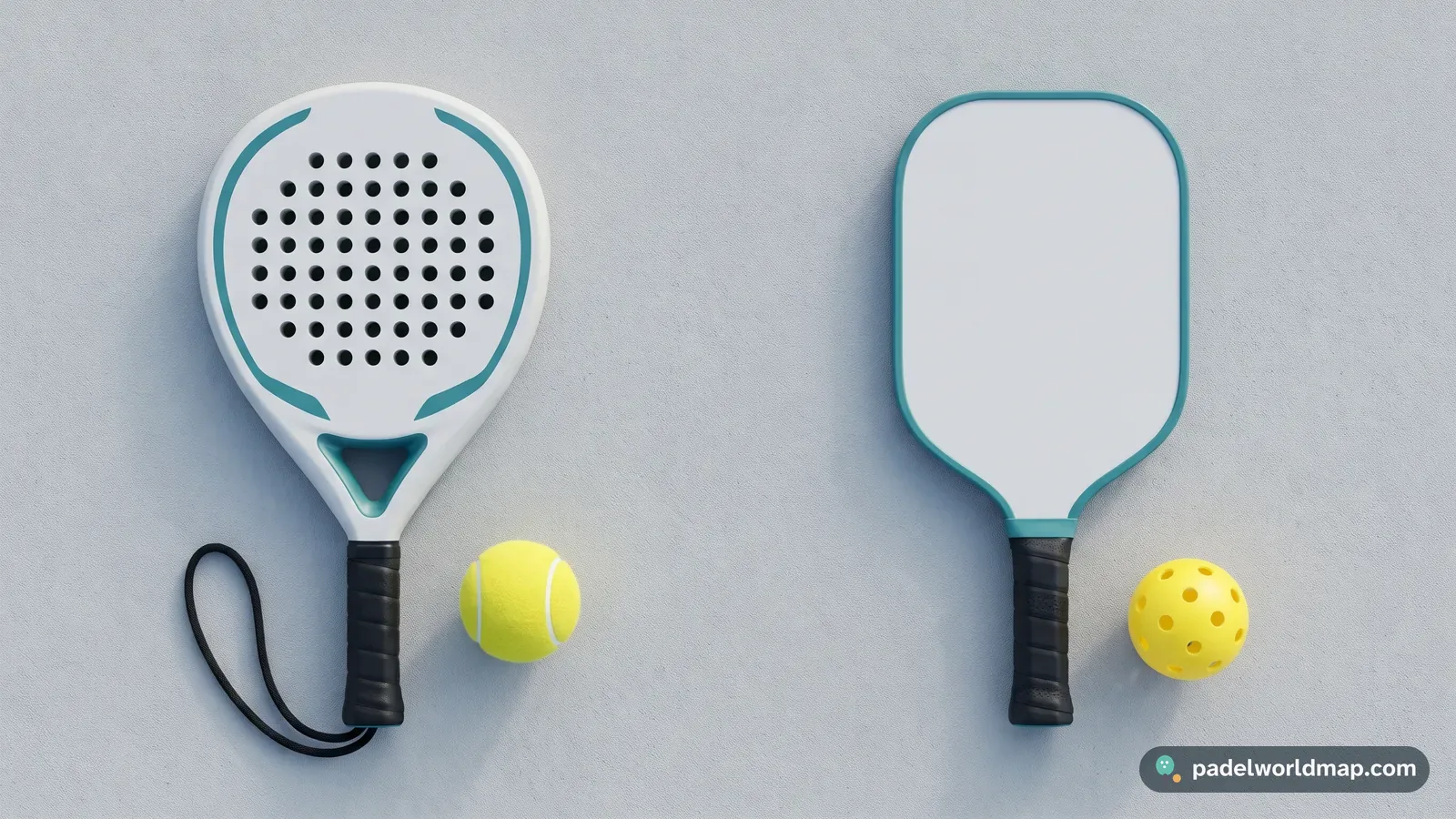
People mix them up all the time, and I get why: both are played with a short, solid paddle, both are mostly played in doubles, and both are growing fast. But once you step on court, they feel like completely different sports.
Padel vs pickleball at a glance
| Padel | Pickleball | |
|---|---|---|
| Court size | 20 × 10 m | 13.41 × 6.10 m (44 × 20 ft) |
| Walls | Yes: glass and metal mesh all round, used in play | No walls |
| Net height | 88 cm in the middle, 92 cm at the ends | 86.4 cm in the middle, 91.4 cm at the sides |
| Racket | Solid, perforated with holes, no strings, max 45.5 cm long | Solid, smooth face without holes, max 43.2 cm long |
| Ball | Pressurised felt ball, 6.35–6.77 cm, 56–59.4 g | Hard plastic with 26–40 holes, about 7.3–7.5 cm, 22–26.5 g |
| Serve | Underhand, after one bounce, hit at or below the waist | Underhand, diagonally, must clear the kitchen |
| Scoring | Like tennis: 15, 30, 40, games and sets | Games usually to 11 points, win by 2 |
| Usually played as | Doubles | Doubles and singles |
| Invented | 1969, Acapulco, Mexico | 1965, Bainbridge Island, USA |
1. The court: padel is bigger and fully enclosed
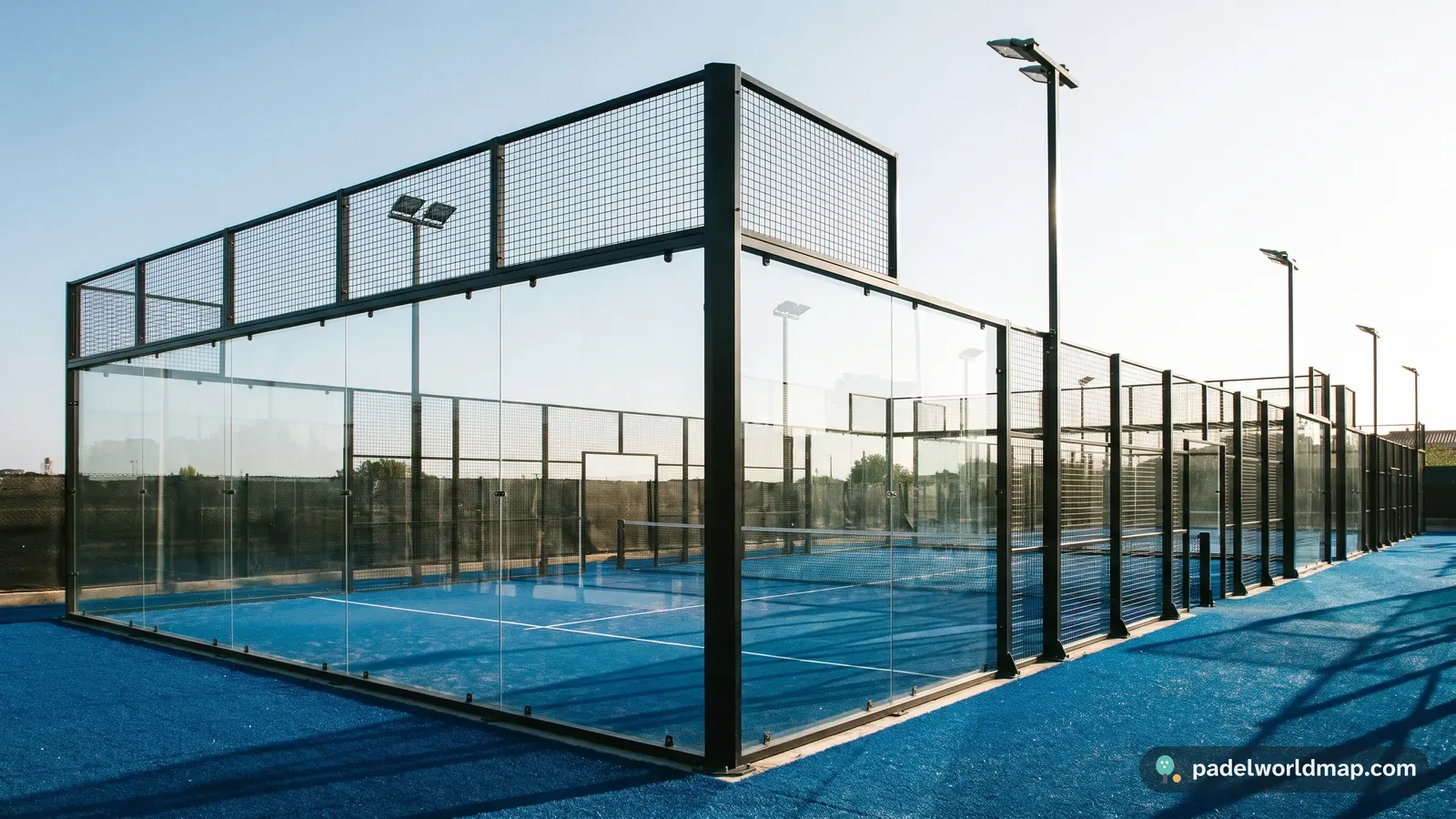
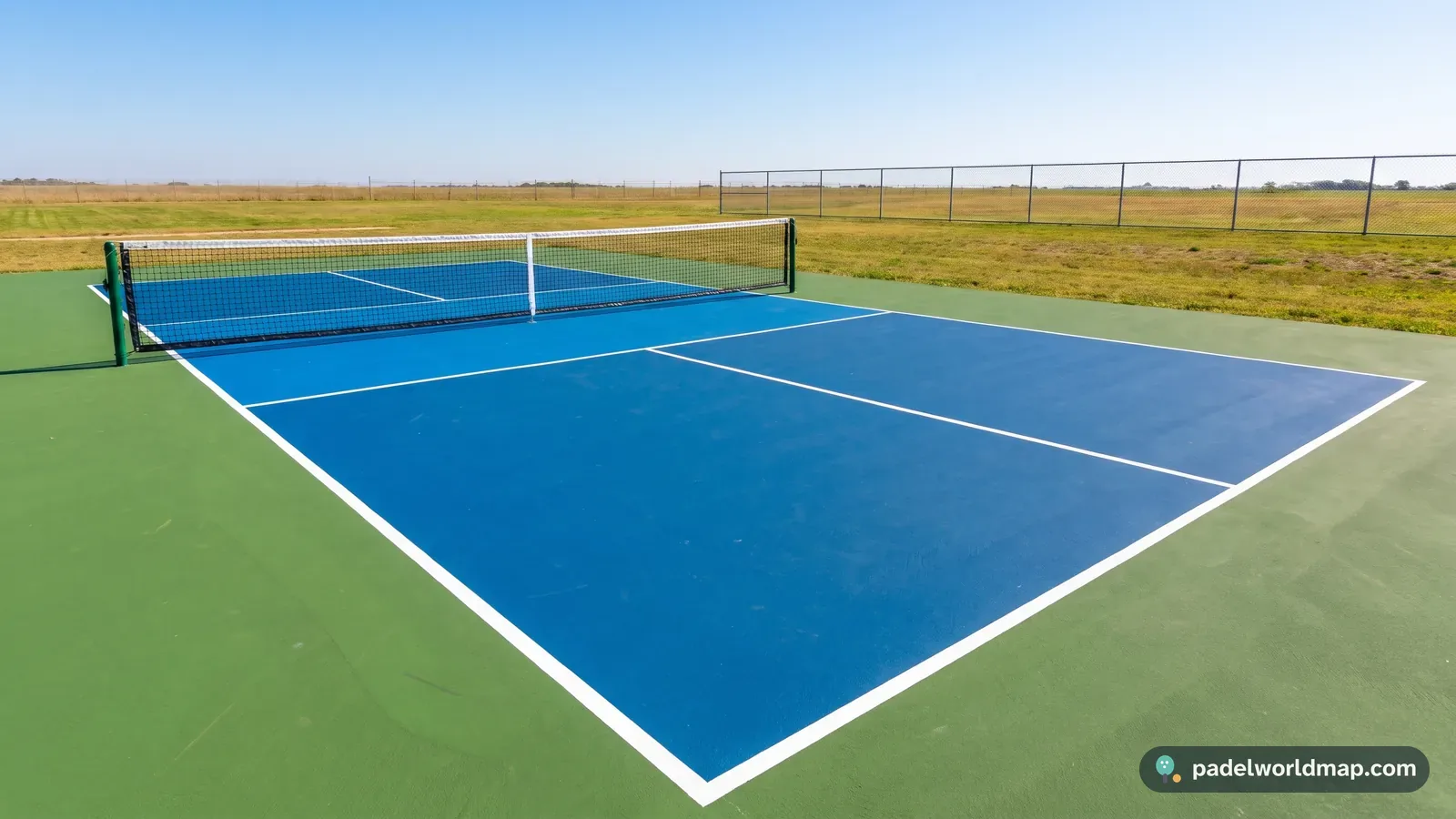
A padel court measures 20 by 10 metres and is closed in on all sides. A pickleball court is 13.41 by 6.10 metres (44 by 20 feet), the same size as a badminton doubles court, and it is completely open. That makes a padel court about 2.4 times bigger in area.
In padel, the service lines are 6.95 metres from the net. In pickleball, the area 2.13 metres (7 feet) on each side of the net is the non-volley zone, better known as the kitchen. You may not volley the ball (hit it before it bounces) while you're standing in it.
2. The walls: the biggest difference of all
This is what makes padel padel. The court is surrounded by walls: at each end the first 3 metres are glass (or another solid material) with metal mesh on top, up to 4 metres high in total, and the sides are a mix of glass and mesh.
The walls are part of the game:
- Your shot must first bounce on the ground in your opponents' half. After that it may hit their walls, and they can still return it.
- When the ball comes back off the glass behind you, you can still play it, as long as it hasn't bounced twice on the ground.
- You can even hit the ball against your own glass walls to get it back over the net. Hitting your own metal mesh, though, loses the point.
Pickleball has no walls at all. If the ball goes past you, it's gone. That's why pickleball rewards soft, controlled shots near the net, while padel is full of long rallies with the ball coming off the glass.
3. Racket vs paddle
Neither sport uses strings, and that's where the similarity ends.
- A padel racket is thick and solid, with a foam core and a face full of small holes (9 to 13 mm each). By the official rules it may be at most 45.5 cm long, 26 cm wide and 38 mm thick, and it usually has a wrist strap.
- A pickleball paddle is thinner and flat, with a smooth face that may not have holes. It may be at most 43.2 cm (17 inches) long, and length plus width together may not exceed 61 cm (24 inches).
In practice, a padel racket feels heavier and gives you more power off the walls, while a pickleball paddle is lighter and made for quick hands at the net.
4. The ball: felt vs plastic
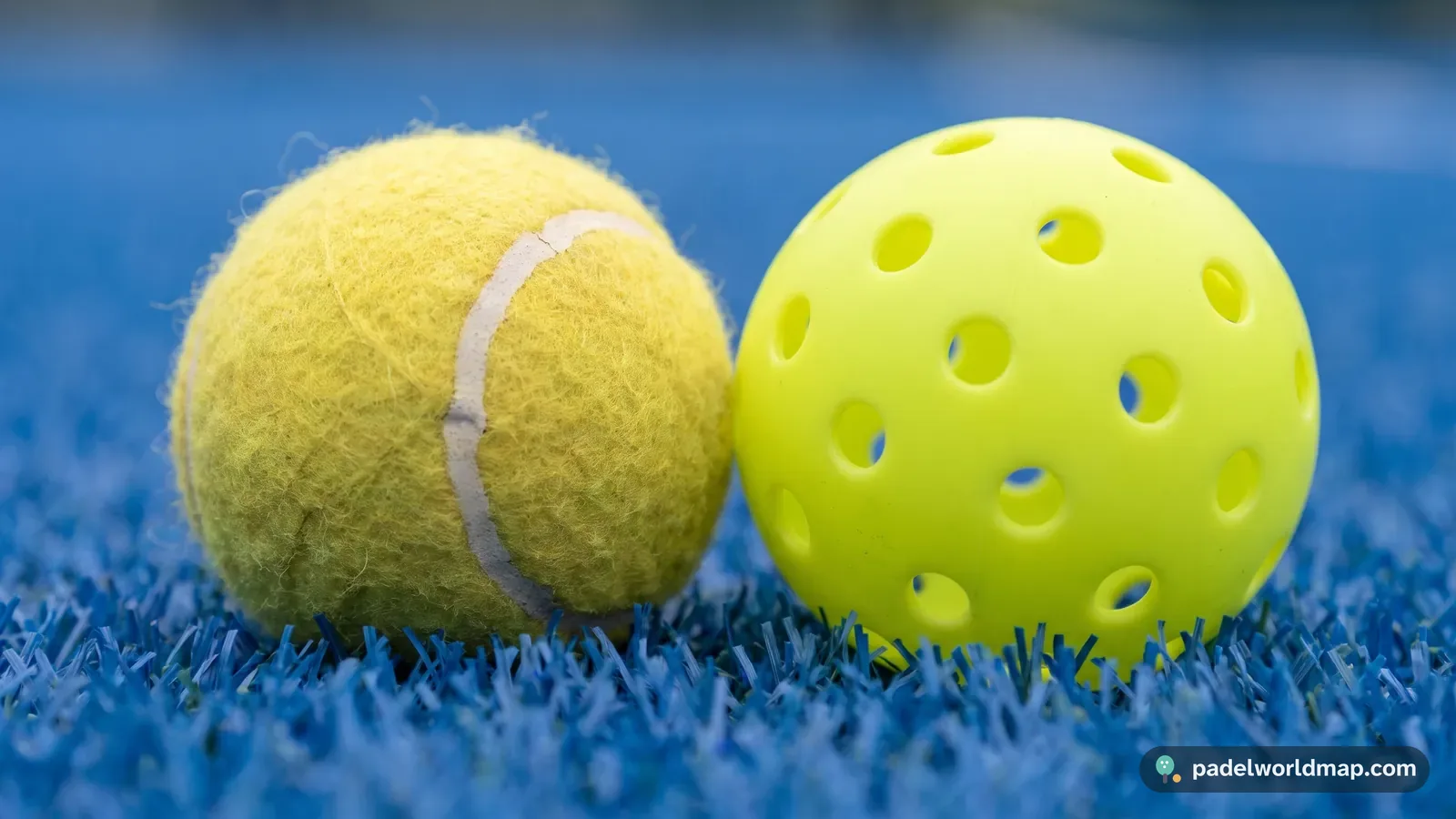
A padel ball looks almost exactly like a tennis ball: pressurised rubber covered in felt, 6.35 to 6.77 cm across and 56 to 59.4 grams. It has a little less pressure than a tennis ball, so it bounces lower and suits the smaller court.
A pickleball is a hollow, hard plastic ball with 26 to 40 round holes, about 7.3 to 7.5 cm across and only 22 to 26.5 grams. Because it's so light and full of holes, it flies slower and doesn't bounce much, which makes rallies slower and more tactical.
5. The serve
Both sports serve underhand and diagonally, but the details differ.
- Padel: you stand behind the service line, bounce the ball once on the ground, and hit it at or below waist height into the opposite service box. It may hit the glass after bouncing, but not the metal mesh. If the first serve fails, you get a second one.
- Pickleball: you serve from behind the baseline, diagonally across, and the ball must land beyond the kitchen. After the serve comes the two-bounce rule: the return must bounce, and the next shot must bounce too, before anyone may volley.
Pickleball's serve rules have been fine-tuned several times in recent years, so if you play in competitions, check the current rulebook of your federation.
6. Scoring
Padel uses tennis scoring: 15, 30, 40, game. The first pair to win six games (with a two-game lead) wins the set, with a tie-break at 6–6, and matches are usually best of three sets. Some competitions play a deciding “golden point” at 40–40 instead of advantage.
Pickleball games are usually played to 11 points, win by 2. In the traditional system, only the serving side can score. Rally scoring, where every rally wins a point, is also used in some formats.
Which one is easier to learn?
Both are easy to pick up, which is a big part of why they're so popular. Pickleball is very quick to start, because the court is small and the ball is slow. Padel needs a little more getting used to, because you have to learn to let the ball come off the glass, but most beginners are having long rallies within their first hour. If you've played tennis or squash, padel will feel familiar quickly.
Which one should you try?
My honest advice: try both. If you love fast rallies, the sound of the ball off the glass and a sport that rewards running and smart positioning, you'll probably fall for padel. If you prefer a gentle start and lots of touch at the net, pickleball is great fun too.
Want to give padel a go? Tap Padel near me to find the closest courts, or start with the cities where padel is biggest: Madrid, Rome, London, Dubai or Miami. Many clubs offer beginner lessons, and in cities like London you'll find plenty of indoor courts for rainy days.
Got more questions? Our padel FAQ covers the rules, court size and how to book a court.